Feature of the week
December 2nd Week, 2025
AQUASAURUS
Project by Jitesh Kallat
Links:
Project Page , Artist Website
Aquasaurus is not decorative. It's not meant to beautify museums. It memorializes. It transforms documentation of urban violence into sculptural meditation on mortality. A vehicle that sustains life becomes a monument to death. Small forgotten drawings from 2002 become monumental statements about a nation that "reopened older wounds" in its founding ideals.
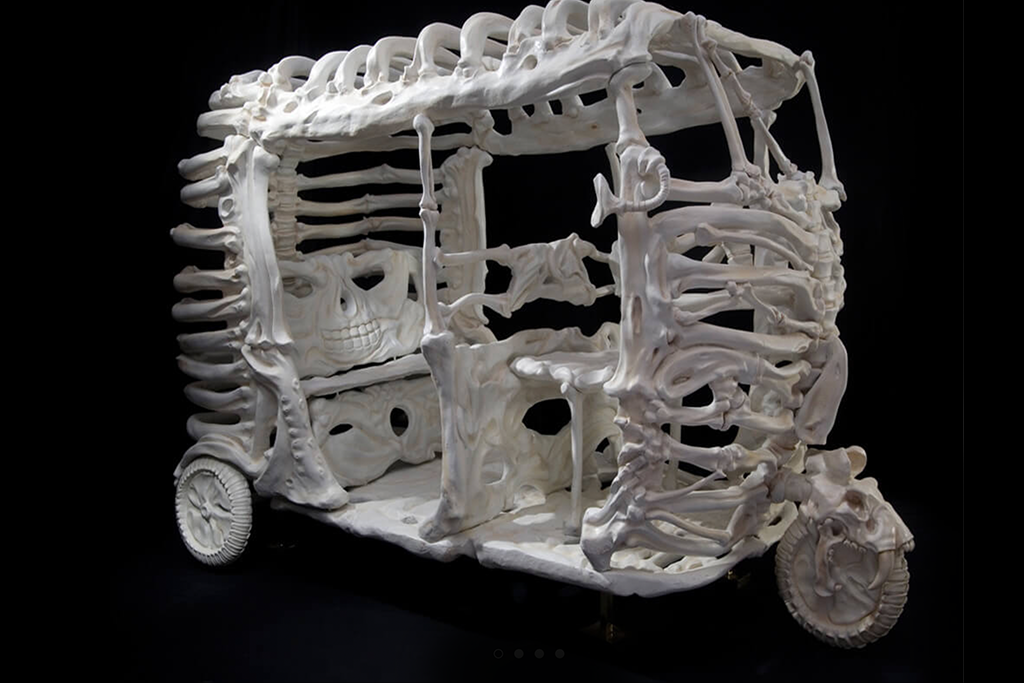
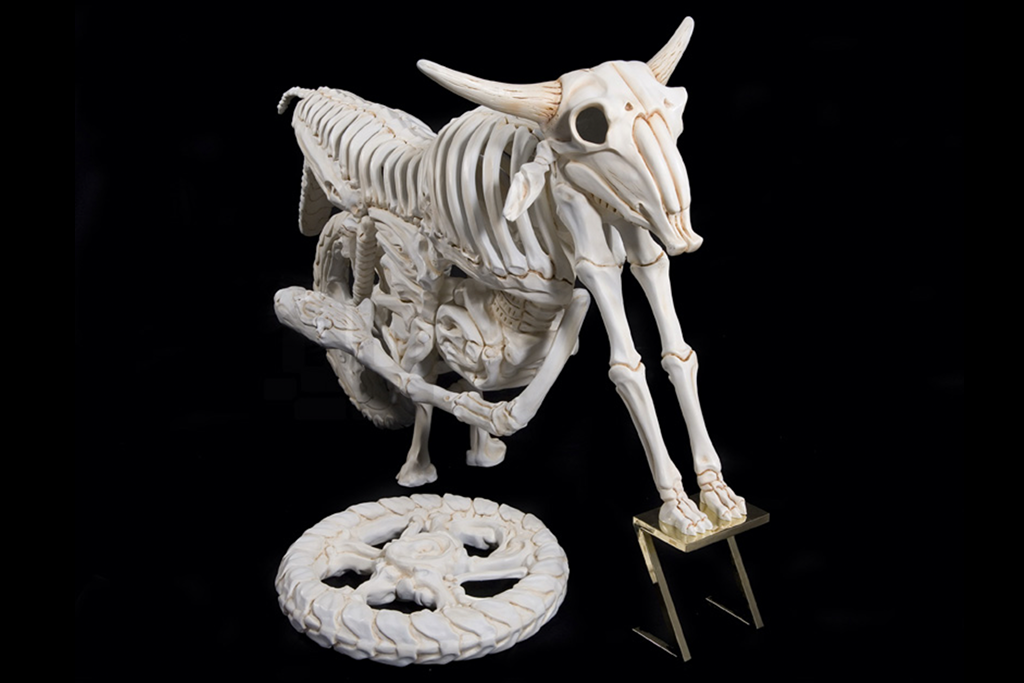
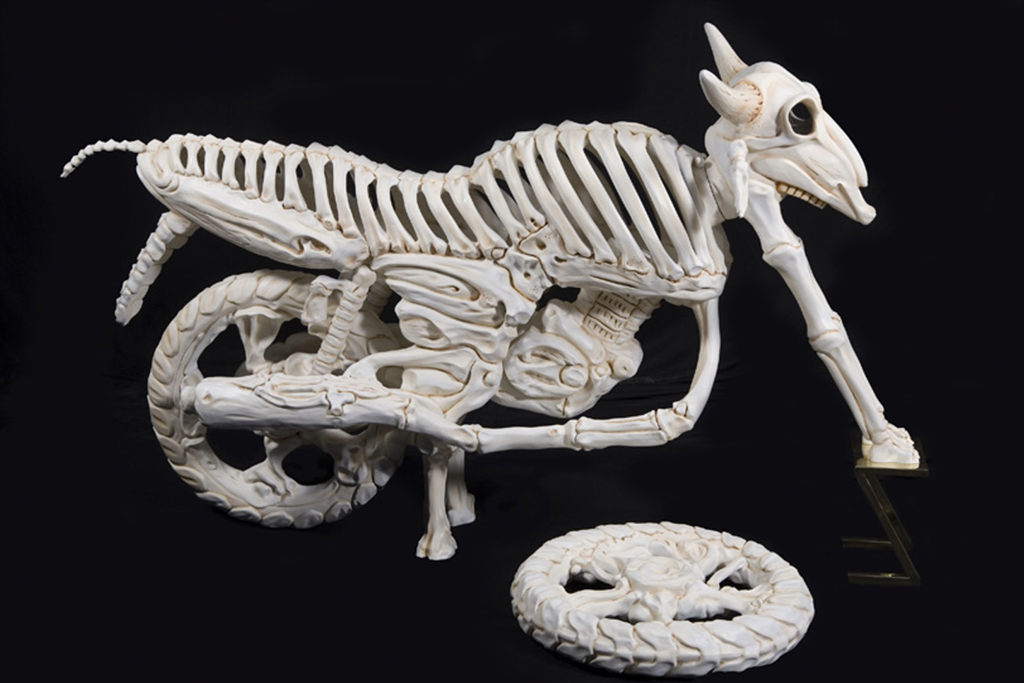
A seven-meter-long water tanker, rendered entirely skeletal in resin, paint, and steel - transforming the everyday vehicle of survival in Indian cities into a monument of death and loss.
A seven-meter-long water tanker, rendered entirely skeletal in resin, paint, and steel - transforming the everyday vehicle of survival in Indian cities into a monument of death and loss.
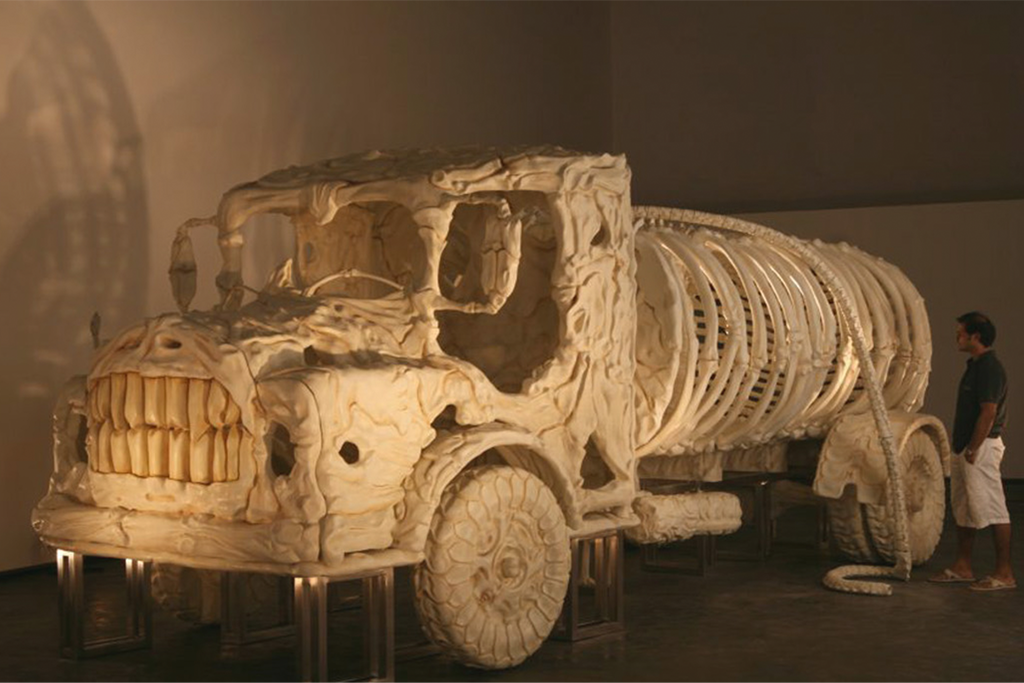 Image above: Aquasaurus 2008, Resin, paint, steel, on the display
 Quote by Artist
"I think of pieces... that commemorate the anomaly received through a mis-registered moment and connects with themes that were prevalent in the earliest works, whether it's the idea of time, mortality, the absent body and its shadow as death."
What You're Looking At
Imagine driving past a water tanker in Mumbai traffic - one of those essential vehicles ferrying drinking water to neighborhoods with scarce access. Now imagine that exact vehicle stripped of all flesh, rendered as pure skeletal form, scaled to seven meters (23 feet) long, and displayed in a museum. That's Aquasaurus. It's unsettling. It's beautiful. It refuses to be ignored.
According to the artist's official documentation, it is described as "grotesque, burlesque and arabesque in equal measure" for its mammoth size and heavily ornamented yet monstrous body."
Unlike the tiny gouache drawings, the sculptures demanded scale and permanence. Aquasaurus is constructed from "resin, paint, steel" according to the artist's official documentation. The sculpture measures 254 x 688 x 269 cm (approximately 7 meters)—the exact scale of an actual water tanker.
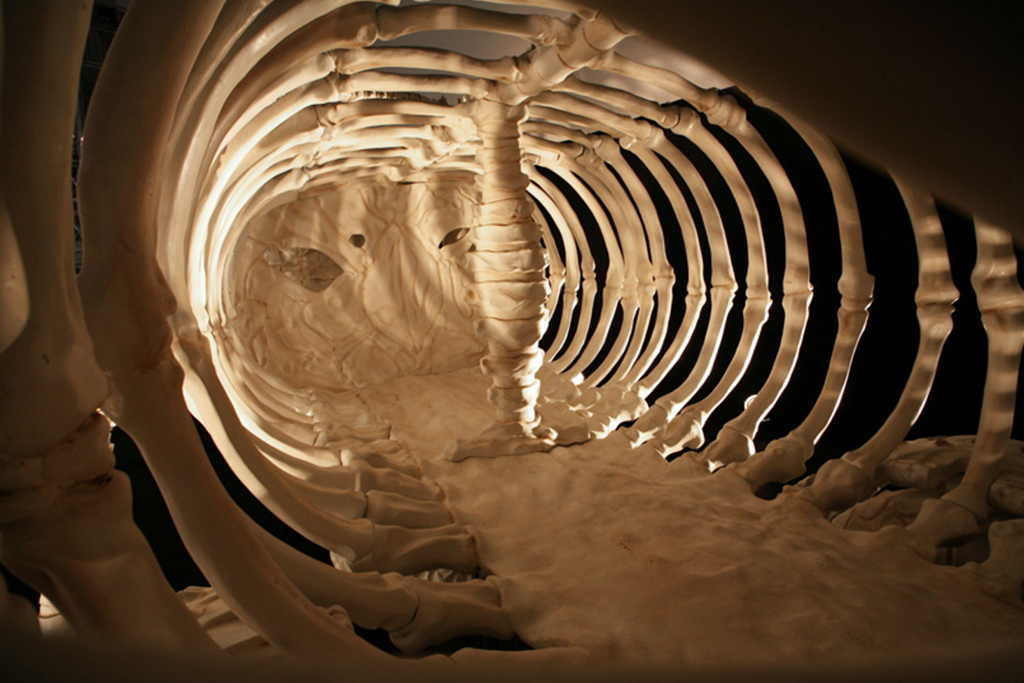
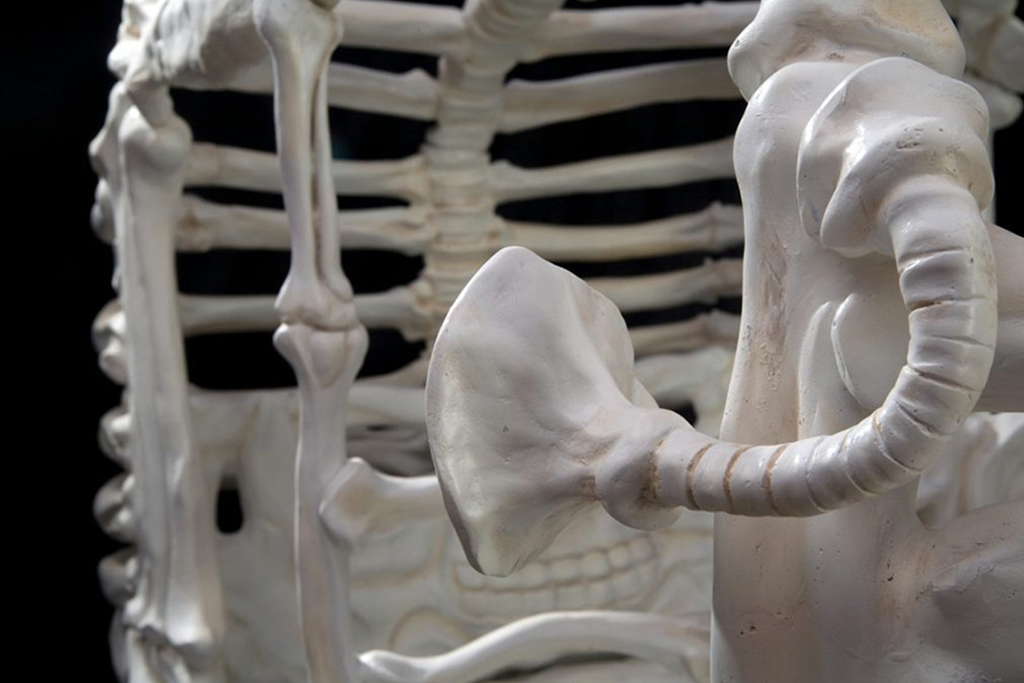
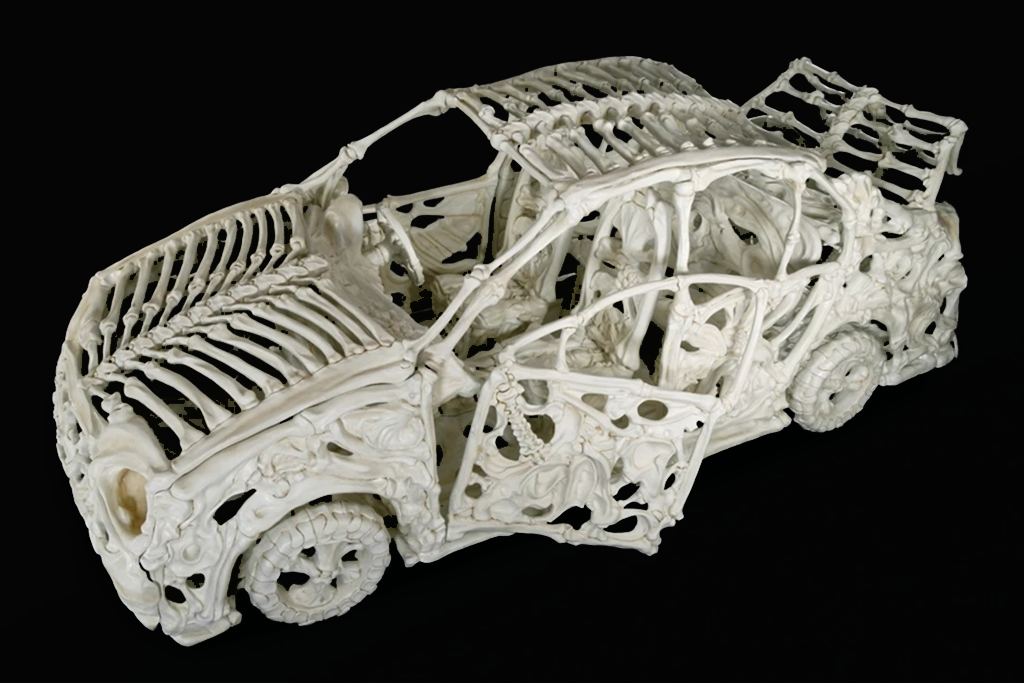
Image above: Aquasaurus 2008, view from the inside
From Small Drawings to Monumental Sculpture: A 6-Year Journey
2002: Tiny Gouache Drawings
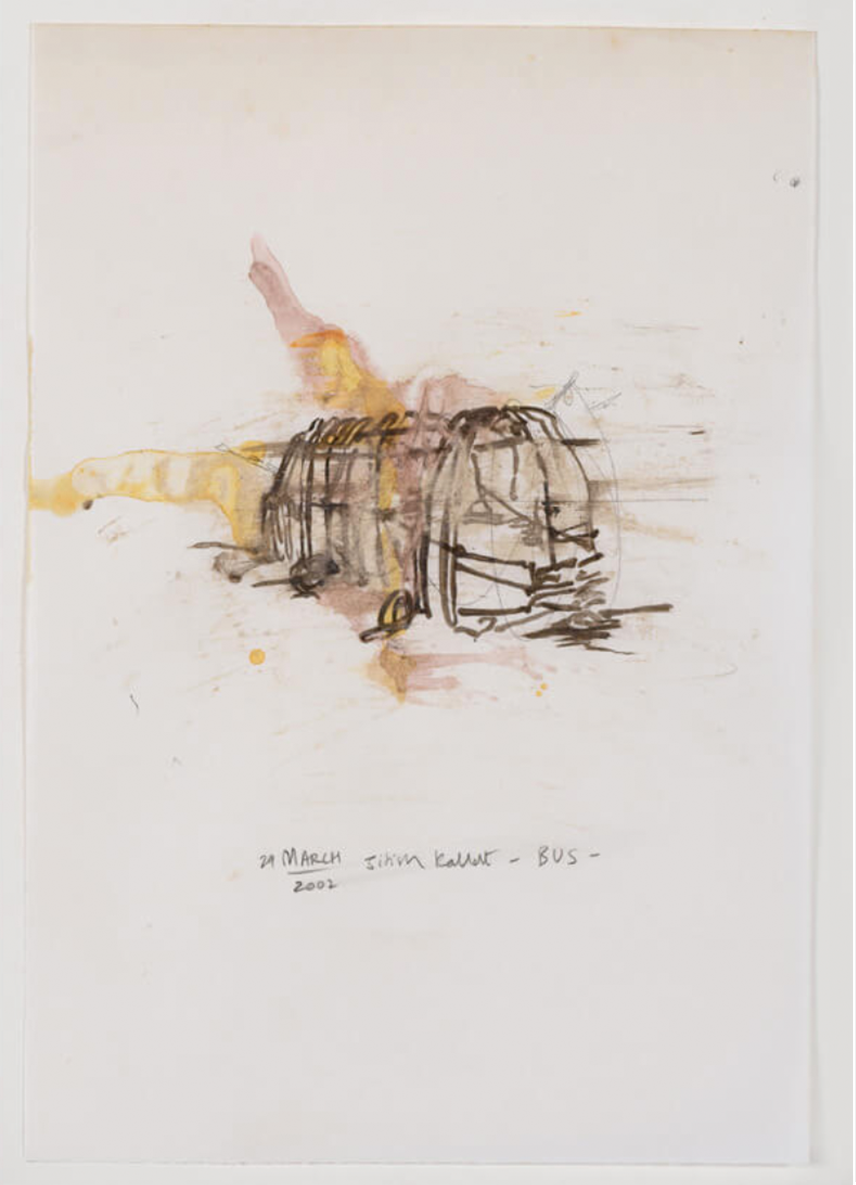
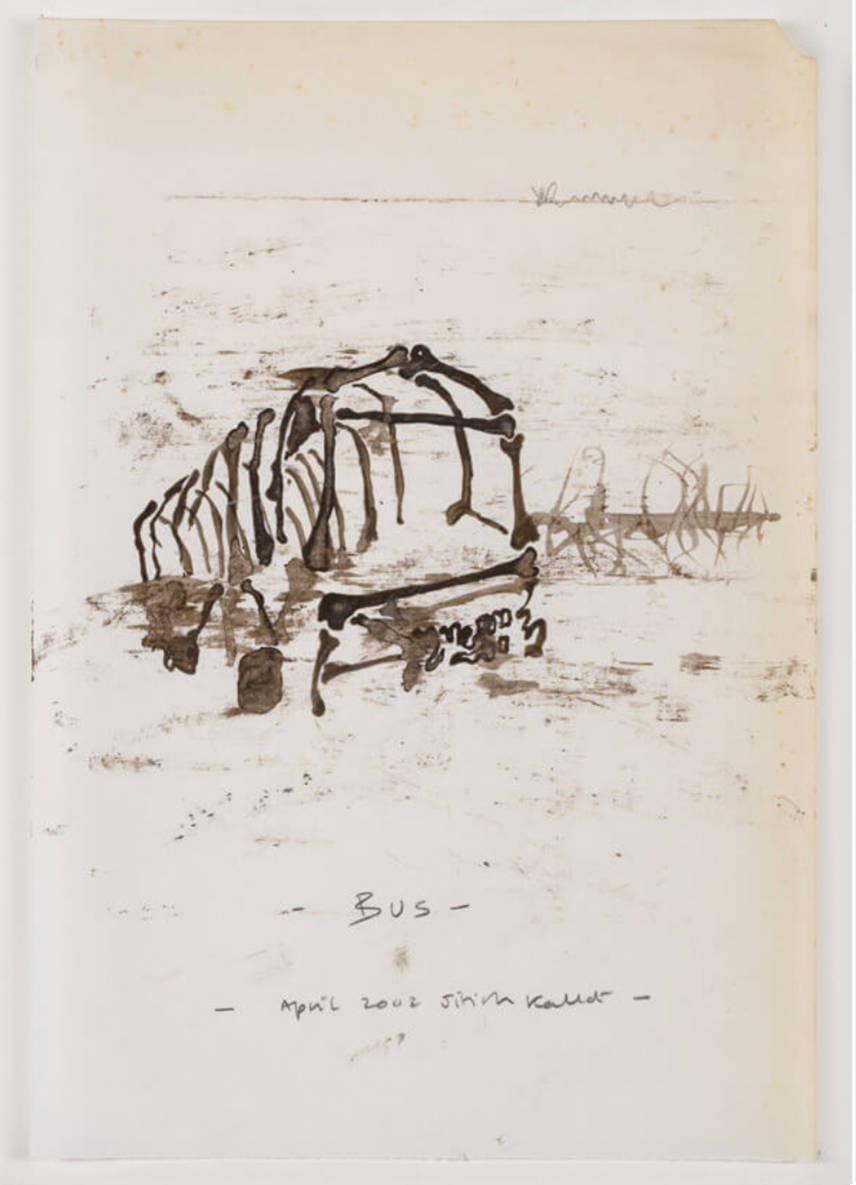
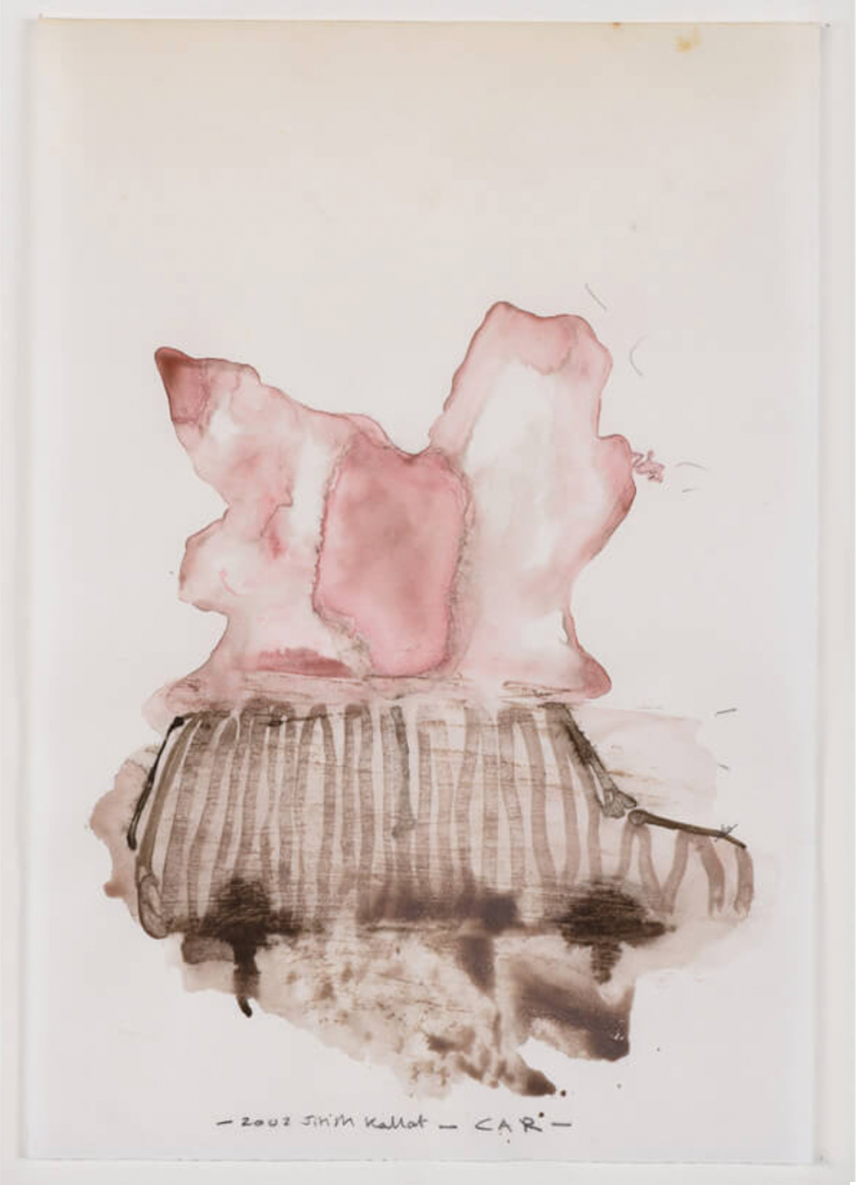
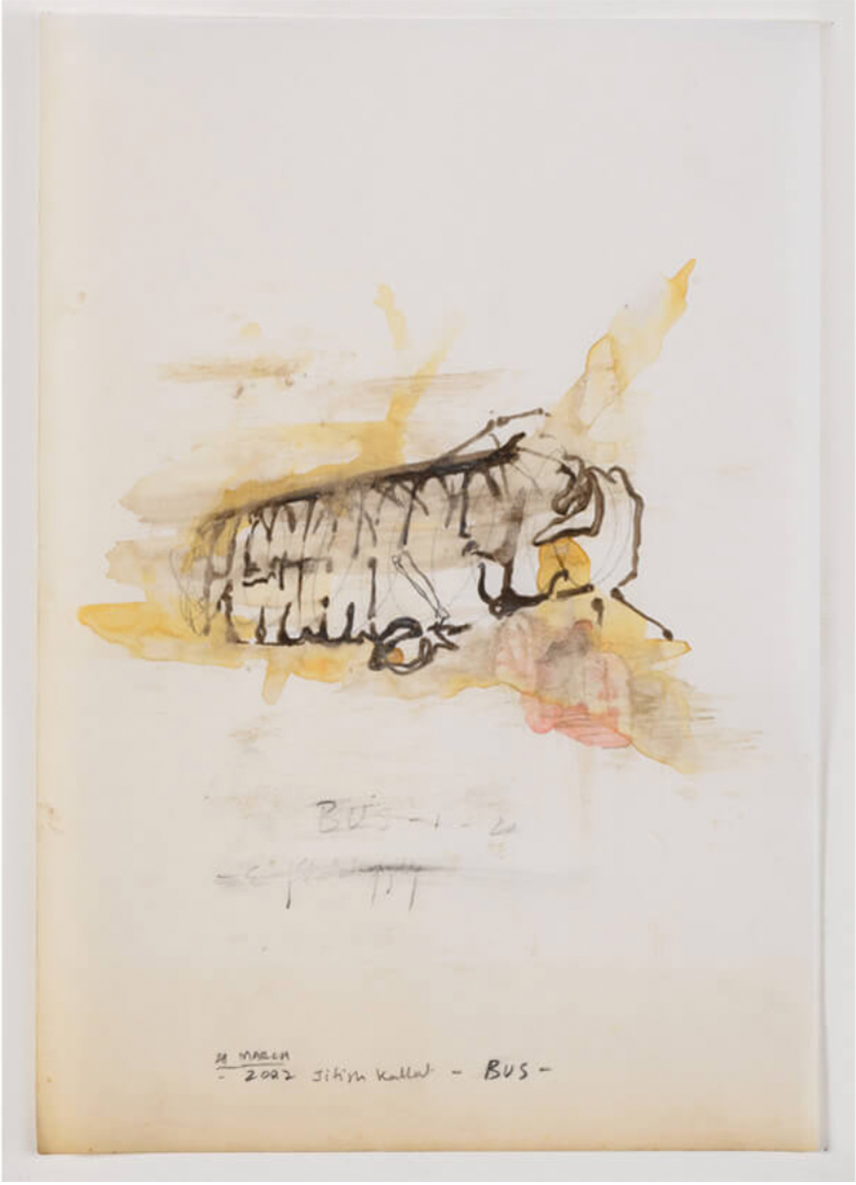
Kallat made small gouache drawings (13 x 9 inches) "referencing found photographs of vehicles burnt and damaged in riots. To Kallat they appeared like remains of prehistoric exhumed species." These weren't meant to become anything. They were filed away, forgotten.
LInk: https://jitishkallat.com/works/untitled-drawing/
2006-2008: Sculptural Awakening
Then, unexpectedly, Kallat revisited these forgotten drawings. According to his own words: "almost 5 years later that suddenly looking back at a completely discarded set of drawings they became sculptures and in the process of making the sculpture of course the work had moved and deviated away from what I was thinking of when I made the drawings and became kind of objects unto themselves."
The artist's official statement confirms: "Four years later they had not only shifted form but meaning and became the starting point for the suite of four sculptural works (Aquasaurus, Autosaurus Triopous, Collidonthus and Ignitaurus) between 2006-2008."
Kallat made small gouache drawings (13 x 9 inches) "referencing found photographs of vehicles burnt and damaged in riots. To Kallat they appeared like remains of prehistoric exhumed species." These weren't meant to become anything. They were filed away, forgotten.
LInk: https://jitishkallat.com/works/untitled-drawing/
2006-2008: Sculptural Awakening
Then, unexpectedly, Kallat revisited these forgotten drawings. According to his own words: "almost 5 years later that suddenly looking back at a completely discarded set of drawings they became sculptures and in the process of making the sculpture of course the work had moved and deviated away from what I was thinking of when I made the drawings and became kind of objects unto themselves."
The artist's official statement confirms: "Four years later they had not only shifted form but meaning and became the starting point for the suite of four sculptural works (Aquasaurus, Autosaurus Triopous, Collidonthus and Ignitaurus) between 2006-2008."
Building the Beast: Materials & Process
The process involved translating skeletal drawings into three-dimensional form. Each bone-like element was meticulously constructed, painted, and assembled to reference both natural history museum displays (think dinosaur skeletons) and the grotesque beauty of industrial objects stripped down to their structural essence. The scale is intentional - it forces you to confront something usually invisible: the vehicle that keeps millions alive in water-scarce cities, now rendered as a monument to mortality.
The artist explains directly
"It all began in 2002 when India saw one of the worst sectarian riots that India had ever seen and it was at that point that I began going back and reading texts that preceded the formation of the nation to really understand why 50 years later we were reopening older wounds."
The Artist's DNA: Connected Works & Recurring Obsessions
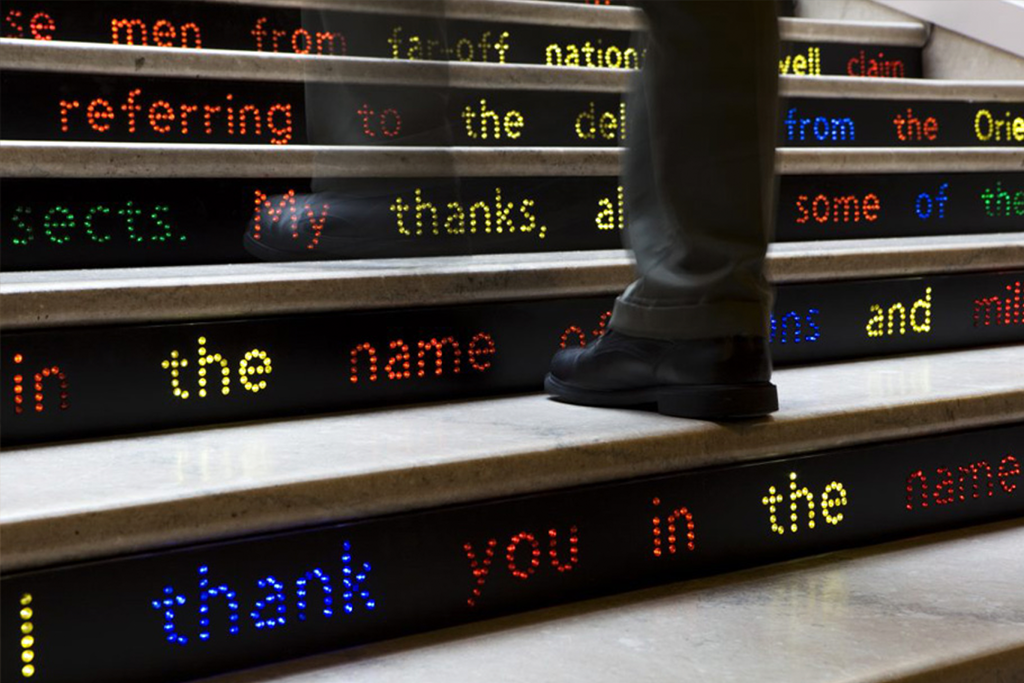
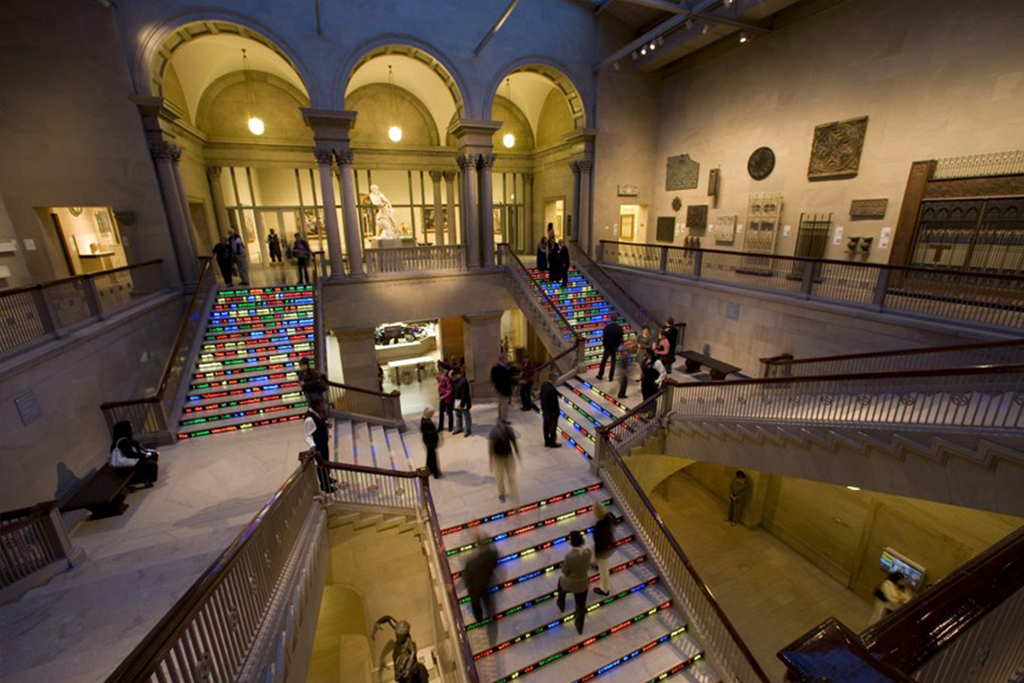
Public Notice Series (2003 onwards)
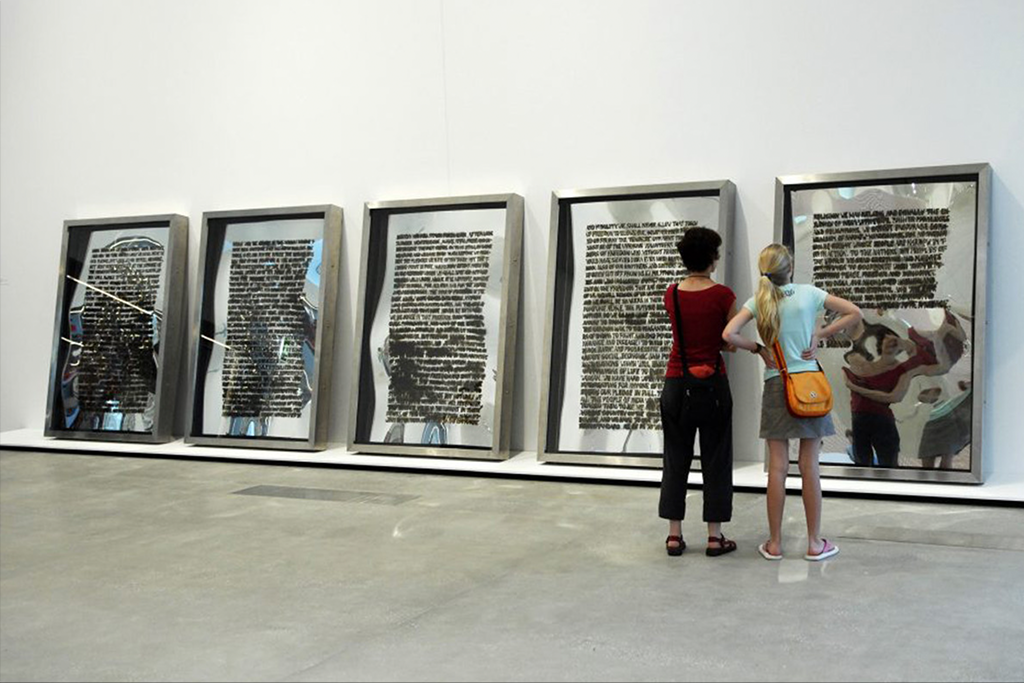
Beginning with Public Notice 1 (2003), Kallat hand-inscribed Nehru's "Tryst with Destiny" speech using rubber glue on acrylic panels before setting fire to it.
According to the artist: "The incinerated skeleton of the speech thus produced dramatically brings to focus the failure of the Nehruvian dream. The letters, inscribed in fire, evoke the horrendous violence and arson that was unleashed in Gujarat during the 2002 riots."
Beginning with Public Notice 1 (2003), Kallat hand-inscribed Nehru's "Tryst with Destiny" speech using rubber glue on acrylic panels before setting fire to it.
According to the artist: "The incinerated skeleton of the speech thus produced dramatically brings to focus the failure of the Nehruvian dream. The letters, inscribed in fire, evoke the horrendous violence and arson that was unleashed in Gujarat during the 2002 riots."
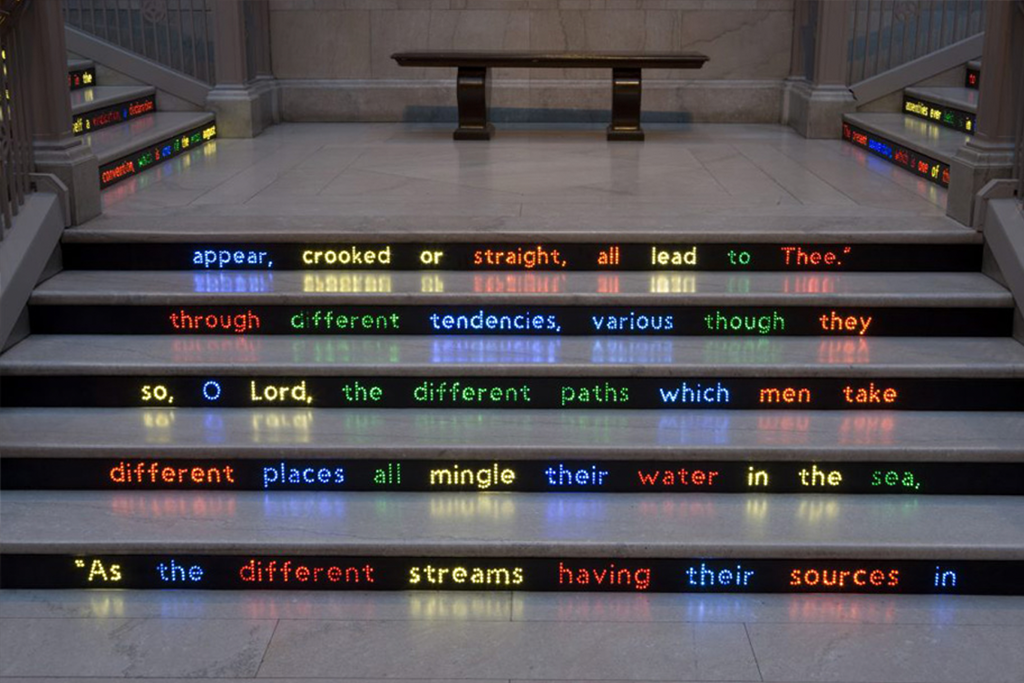
Public Notice 2 (2007) followed, rendering Gandhi's speech in letters cast from resin bones. Same year as Autosaurus Triopous.
Key Connection: All these works use fire, skeleton, and historical texts to commemorate loss. Kallat uses the same combustible materials repeatedly - "The inflammable fluid is the same that I used to render Nehru's speech 12 or 13 years ago" - creating a visual language of loss across decades.
Key Connection: All these works use fire, skeleton, and historical texts to commemorate loss. Kallat uses the same combustible materials repeatedly - "The inflammable fluid is the same that I used to render Nehru's speech 12 or 13 years ago" - creating a visual language of loss across decades.
The Aquasaurus Series (2006-2008)
Four skeletal vehicles emerged together:
Each represents a different urban vehicle. Each carries symbolic weight: water (sustenance), collision (violence), fire (destruction). All rendered as prehistoric remains.
Artistic Statement on Process: "My process often begins with nebulous impulses that trigger threads of research or image-making processes in drawing and painting. Notes, records, and often my own previous works evolve into new pieces. Many ideas remain dormant until, one day, an unexpected intuition takes hold."
Four skeletal vehicles emerged together:
- Autosaurus Triopous (2007) - General vehicle skeleton
- Collidonthus (2007) - Skeletal collision vehicle
- Aquasaurus (2008) - Water tanker skeleton
- Ignitaurus (2008) - Fire truck skeleton
Each represents a different urban vehicle. Each carries symbolic weight: water (sustenance), collision (violence), fire (destruction). All rendered as prehistoric remains.
Artistic Statement on Process: "My process often begins with nebulous impulses that trigger threads of research or image-making processes in drawing and painting. Notes, records, and often my own previous works evolve into new pieces. Many ideas remain dormant until, one day, an unexpected intuition takes hold."
Sources & Credits (Verified):
- Artist's official website: https://jitishkallat.com/works/aquasaurus/
- Sherman Contemporary Art Foundation publication & curatorial conversation (2008)
- Jitish Kallat interview, "The 30-year artistic journey,"
- MCA Australia artist talk: "Jitish Kallat on his practice and works"(YouTube) - https://www.youtube.com/watch?v=1drZuHsR3ro
- Public Notice artist statement, jitishkallat.com
- Critical Collective interview: "CC interviews Jitish Kallat on his new public sculpture" - https://criticalcollective.in/ArtistConversationInner3.aspx?Aid=1009
All rights to artwork and pictures are owned by the artists and various publishing teams.