Feature of the week
December 3rd Week, 2025
Acts of appearance
Project by Gauri Gill
Links:
Project Page
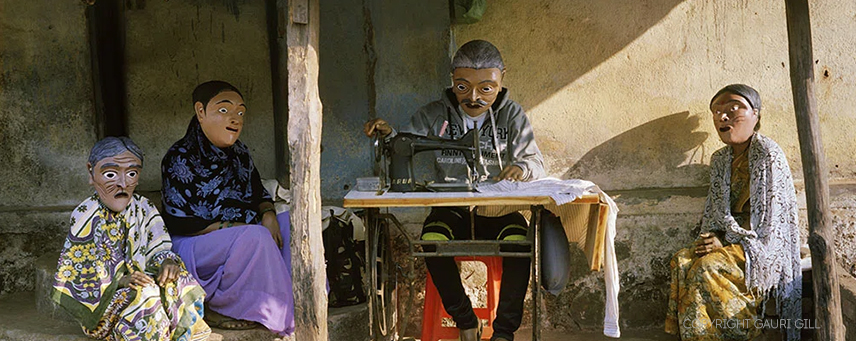
Acts of appearance is an invitation to play. It's not just a photo series, it's a work in progress from 10 years, field-based, collaborative, and ethical creative exploration - that empowers traditional craftsmanship in a contemporary manner.
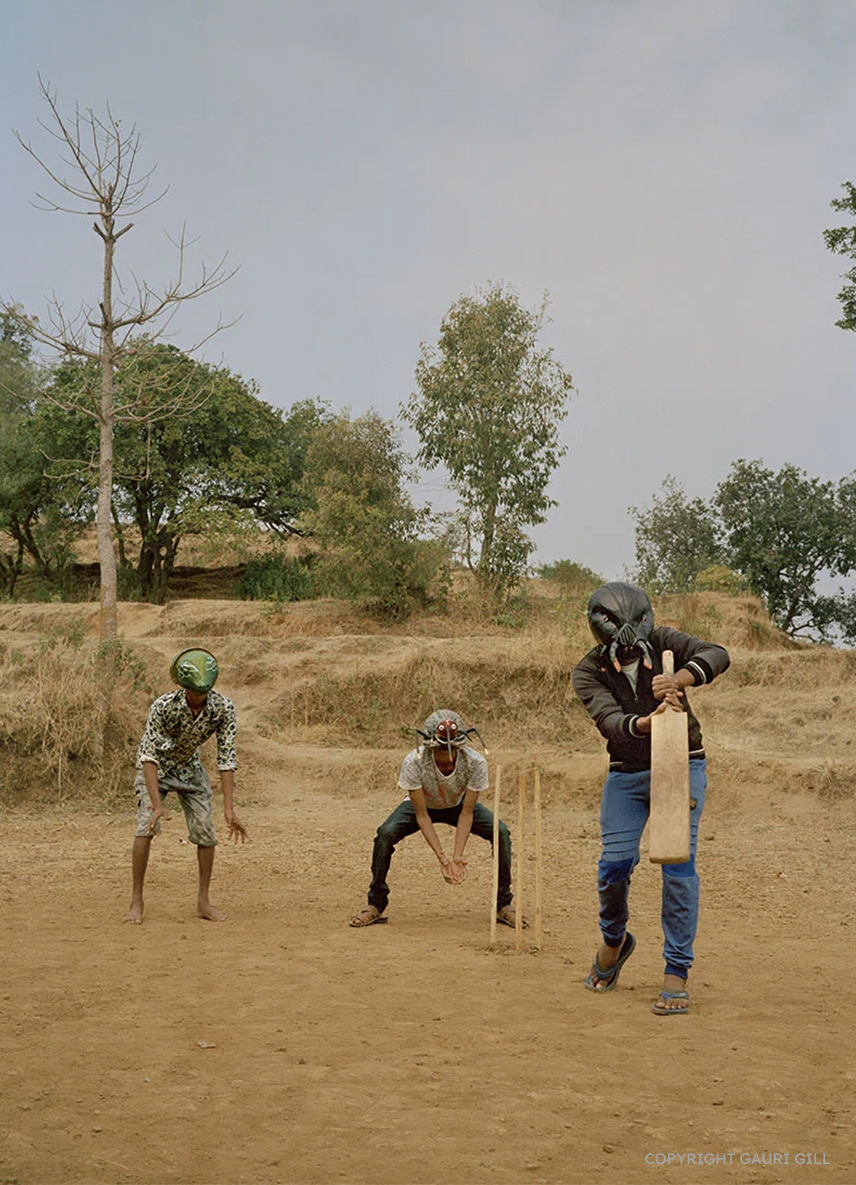
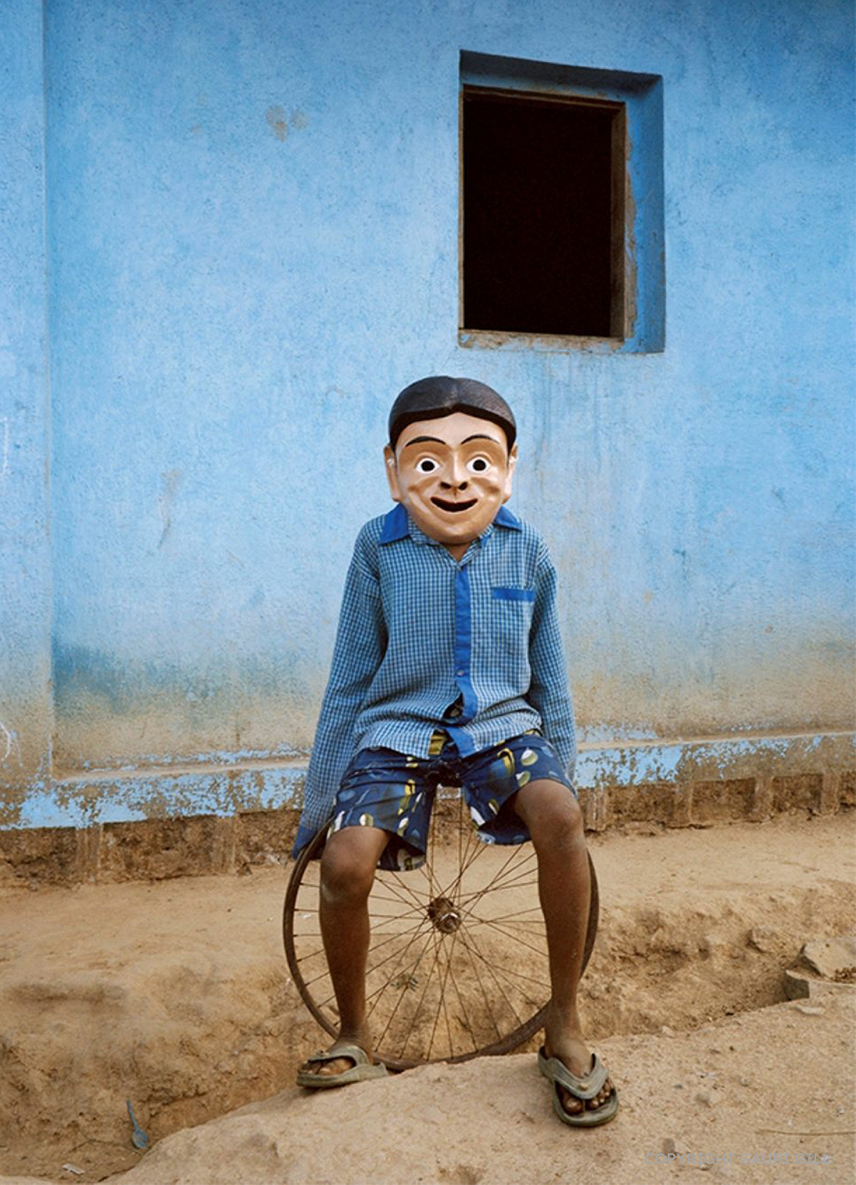
Picture a village of masked figures going about their day as they usually do. An eagle-masked woman sweeps outside her house, an alien-masked man sits beside his deer-faced lover on a bench, a man with a television for a head and many other familiar yet strange scenes. Nothing they do is surprising for rural India; what’s compelling is seeing people wear handcrafted papier-mâché masks while pulling water from a well or resting under the sun.
It feels like a scene from a silent experimental film-school avant-garde movie yet something quieter and deeper is at work here, communicated in a subtle visual language. A good case study for design and art as tools for investigation.
Picture a village of masked figures going about their day as they usually do. An eagle-masked woman sweeps outside her house, an alien-masked man sits beside his deer-faced lover on a bench, a man with a television for a head and many other familiar yet strange scenes. Nothing they do is surprising for rural India; what’s compelling is seeing people wear handcrafted papier-mâché masks while pulling water from a well or resting under the sun.
It feels like a scene from a silent experimental film-school avant-garde movie yet something quieter and deeper is at work here, communicated in a subtle visual language. A good case study for design and art as tools for investigation.
Excerpt from Gauri Gill, Acts of appearance
"When I first heard of the Bohada masks and festival, I began to wonder about the incongruity between these idealised mythic masks and the reality I saw around me... I wondered why it was that the ritual masks were so extraordinary, and if the exaggerated tropes of representation were in fact inversely proportional to the routine landscape of everyday life."
What You're Looking At
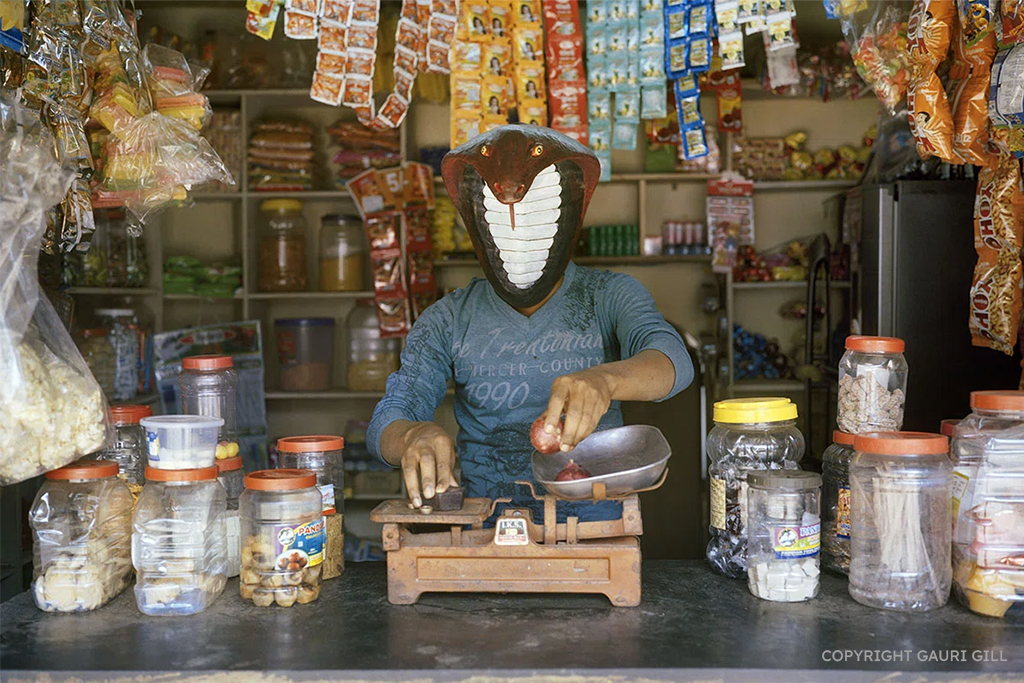
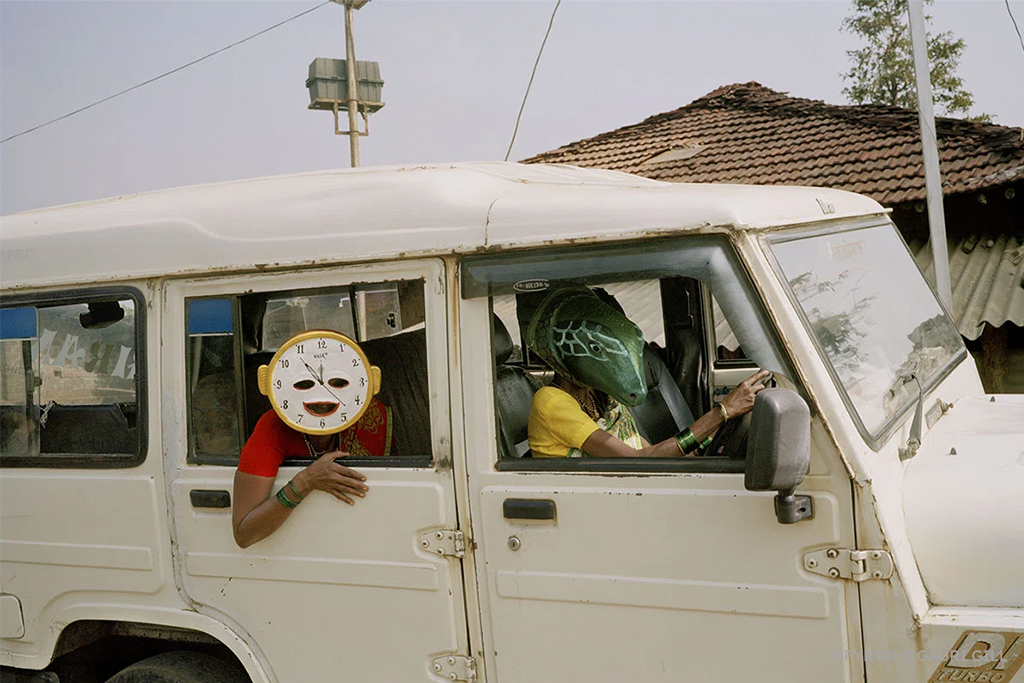
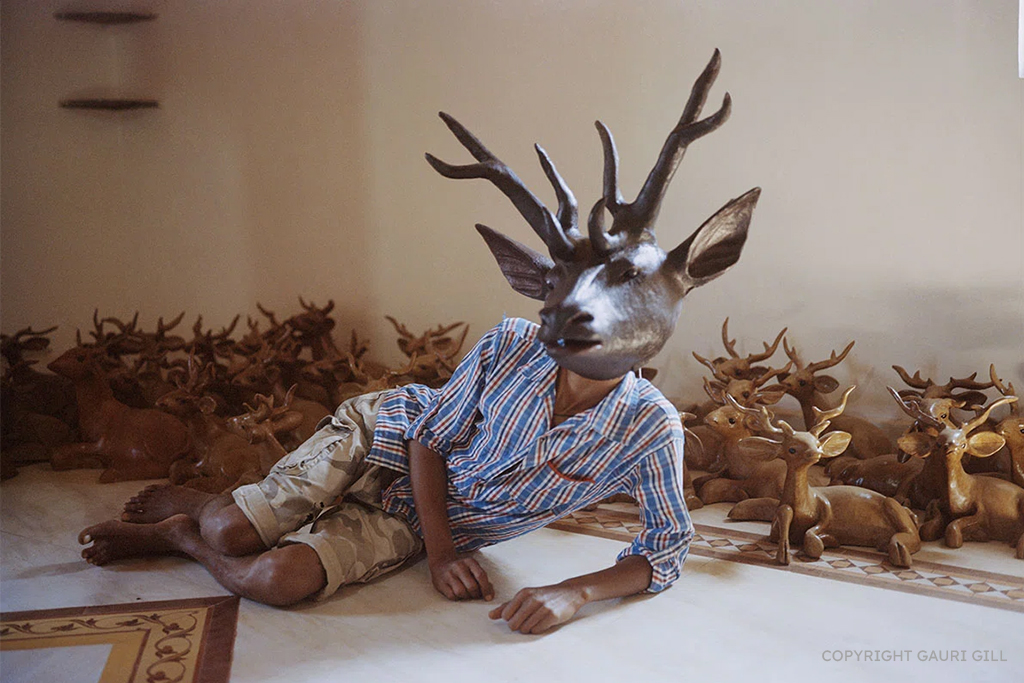
This is Acts of Appearance, a photographic series by Gauri Gill (2015–ongoing). The masks are papier-mâché, handcrafted. The photographs feature masked villagers enacting quotidian rituals - sweeping floors, washing dishes, sitting on benches, reading. In these images, the mundane becomes monumental. The invisible becomes visible. Infrastructure workers, farmers, elders, children. All rendered through masks that protect their individual identities while revealing their collective truth.
The masks depict ordinary people, animals never before shown in their tradition (houseflies, goats, eagles), and treasured modern objects (televisions, mobile phones, water bottles). Each mask is deliberate. In the Adivasi worldview, these objects possess sentience. They matter.

Medium: Photography
Gill photographed these masked beings using large-format analogue film - a slow, intentional medium. The resulting images are archival pigment prints: lush, large-scale color photographs that sit somewhere between ritual and theater, between documentation and imagination. On the surface: performance. Beneath: an investigation into identity, representation, resilience against precarity, and who gets to define what counts as "art."
When the Artist Steps Out
How you actively provide agency and allow creative collaboration to flourish
In 2015, Gill approached the Kadu brothers (local craftsman) with a proposal, not a blueprint. She suggested directions - include your surroundings, daily lives, animals, emitions, babies, the old, the sick. Observe distinctive features. Think about emotions, relationships, aging, etc. But she did not direct the masks. She did not provide samples.
The brothers asked repeatedly: "Is this good? Is this bad? What should we make?"
Gill refused to provide feedback. - an important note for creative researchers.
The brothers asked repeatedly: "Is this good? Is this bad? What should we make?"
Gill refused to provide feedback. - an important note for creative researchers.
According to Gill's own words: "Despite the talent, there was a lack of confidence. As there was no precedent, they asked for samples, and of course there were none. I was interested in what was to come from them and had no predetermined idea or script myself. Instead, I suggested ways to think about real people in the village."
This refusal to judge, to direct, to control is not passivity. It's a deliberate creative method. It's an invitation to play.
This refusal to judge, to direct, to control is not passivity. It's a deliberate creative method. It's an invitation to play.
Here's what practitioners need to understand:
When you create space for suppressed or oppressed communities to ideate freely, without judgment, they reveal what cannot be extracted through interviews or questionnaires. Play releases suppressed voices, ideas, and thoughts . It surfaces imaginative alternatives. It allows people to breakthrough from the mold and think about their own lives in ways they're rarely invited to do.
![]()
![]()
![]()
![]()
The Kadu brothers invited 40 more people into their creative exploration and created masks of a housefly, a goat, an eagle - animals that had never been depicted in their tradition. They imagined expressions for emotions, personalities for objects. They thought about what "contemporary Adivasi identity" looks like when you strip away expectations.
The result: masks that surprised even Gill. Masks that were, as she said, "quite wonderful."
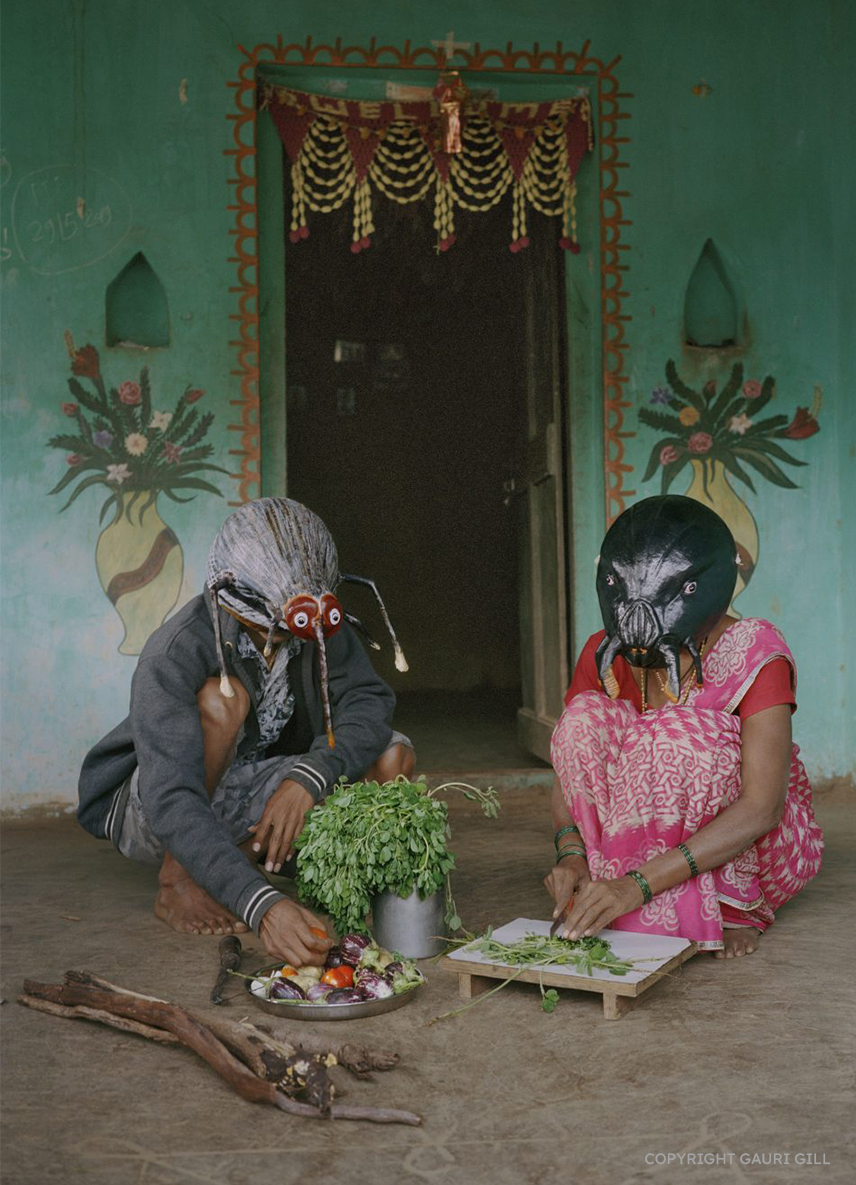
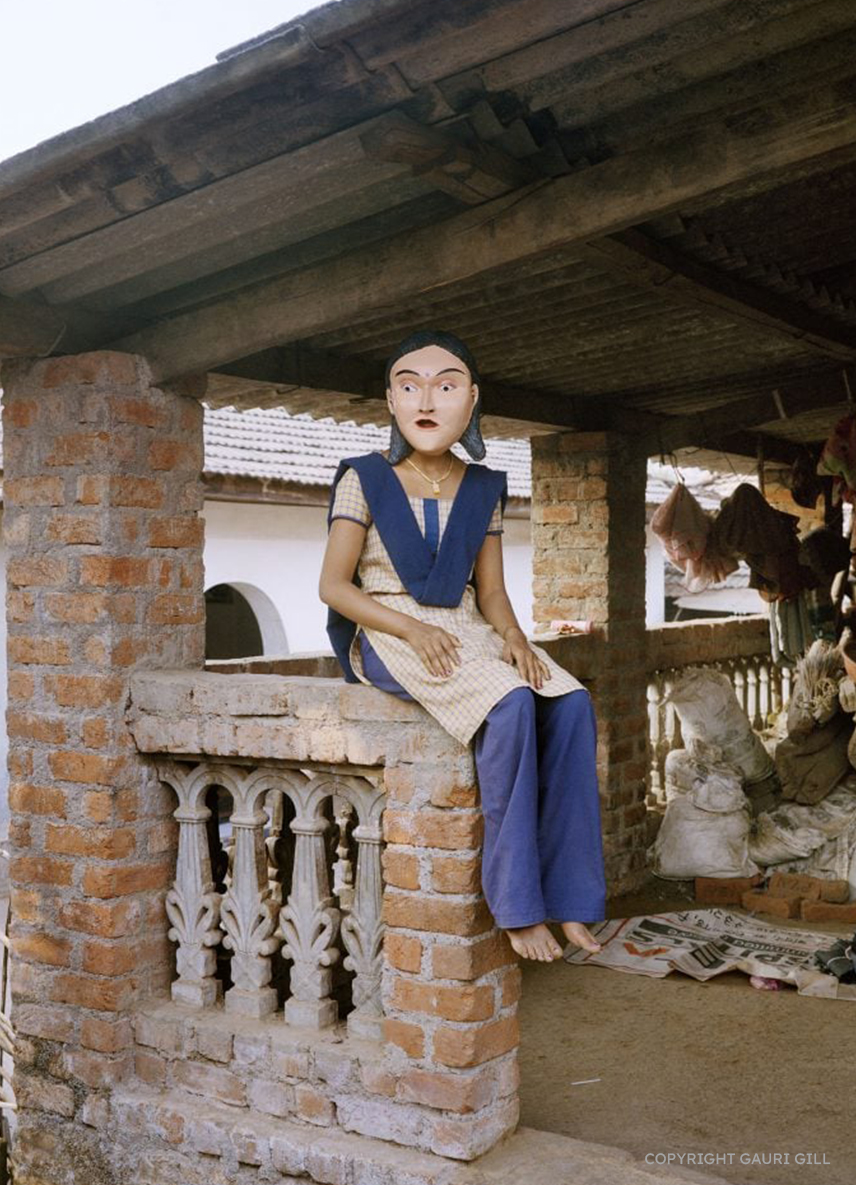
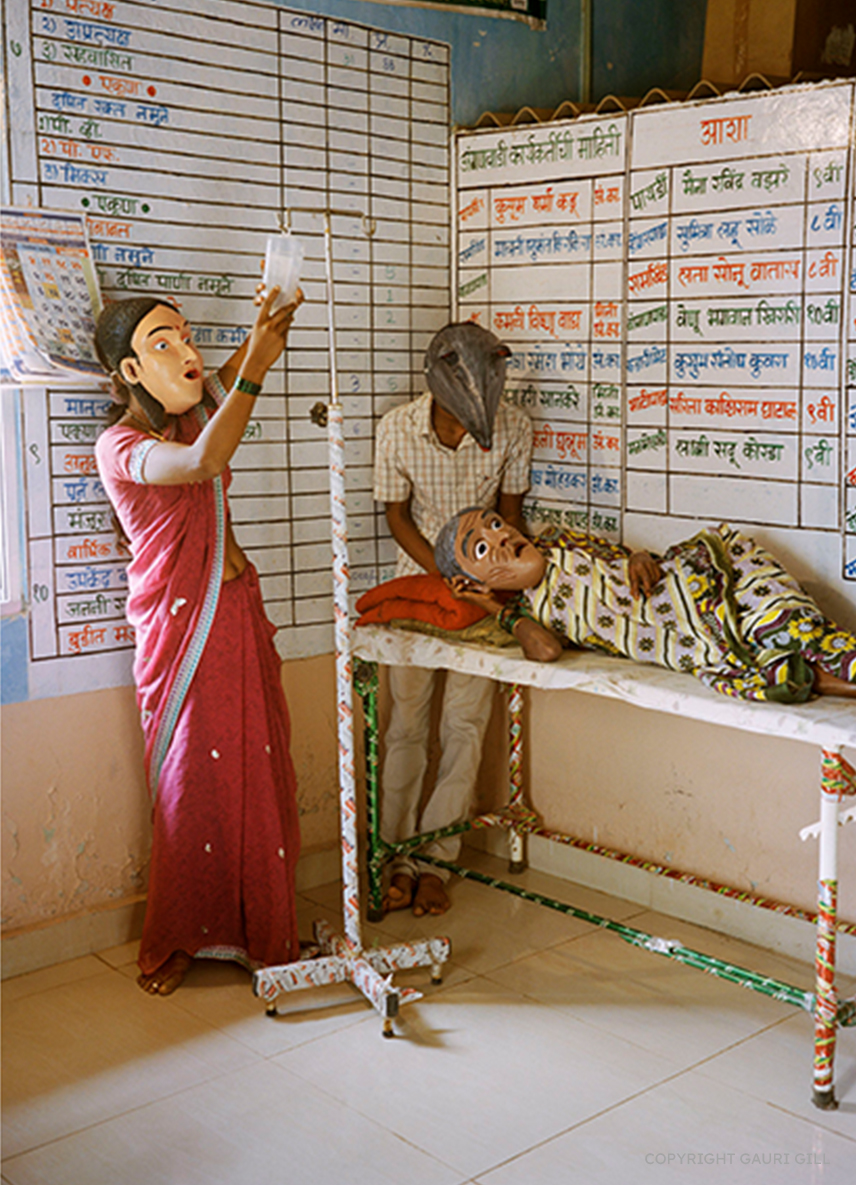
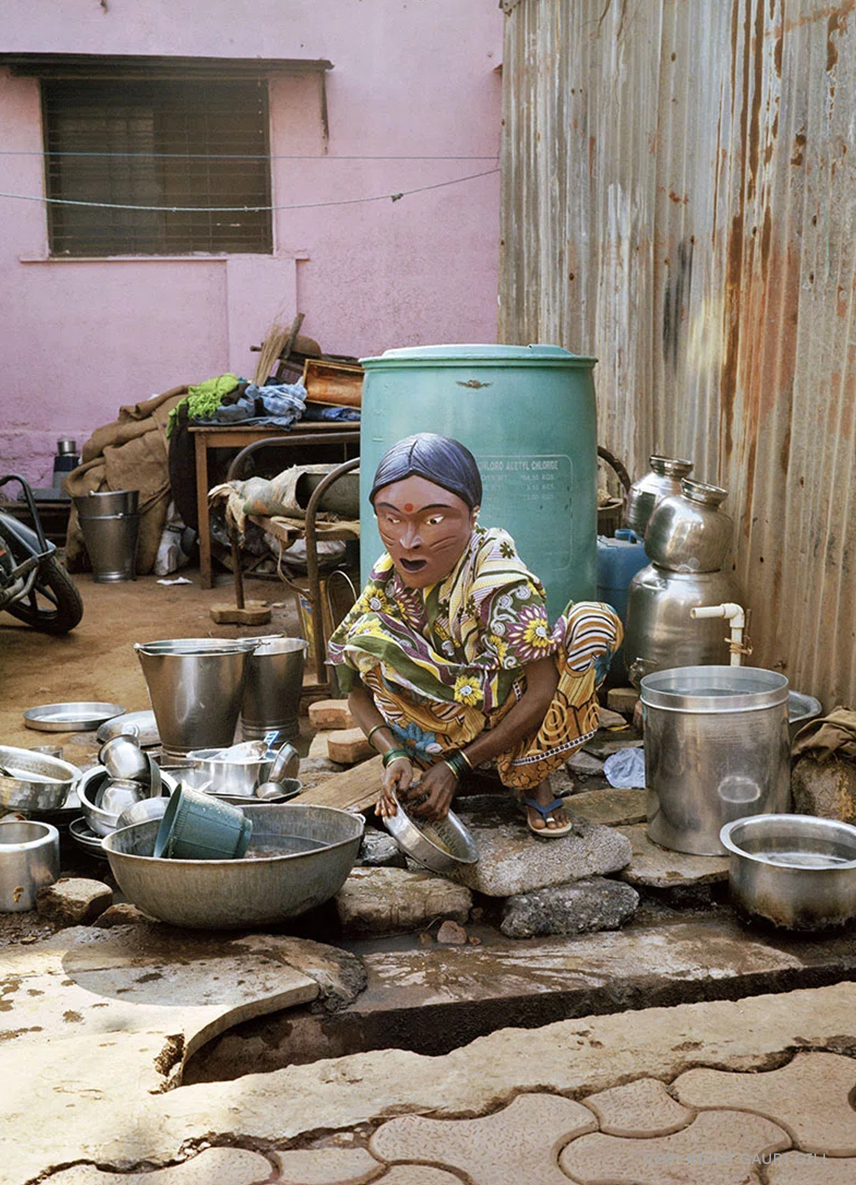
The Kadu brothers invited 40 more people into their creative exploration and created masks of a housefly, a goat, an eagle - animals that had never been depicted in their tradition. They imagined expressions for emotions, personalities for objects. They thought about what "contemporary Adivasi identity" looks like when you strip away expectations.
The result: masks that surprised even Gill. Masks that were, as she said, "quite wonderful."
Building the Masks: Materials, Craft, and Creative Interpretation
The masks are papier-mâché - the same material used for sacred masks for centuries. But the subject matter is radically new.
Materials: Papier-mâché, paint, various embellishments. No expensive materials. The artistry lies in form and imagination, not material cost.
Process: The Kadu brothers and their community made each mask by hand. No molds. No shortcuts. Each one is unique, singular. When you see them in photographs, you're looking at the direct output of these artisans' creative decisions.
Process: The Kadu brothers and their community made each mask by hand. No molds. No shortcuts. Each one is unique, singular. When you see them in photographs, you're looking at the direct output of these artisans' creative decisions.
Subject Matter Expansion:
- Ordinary humans (elderly, sick, young, nursing mothers)
- Animals (housefly, goat, eagle, donkey, fish, cat)
- Modern objects (television, mobile phone, water bottle, radio, camera)
According to documentation
"The artists consciously altered expressions, added distinctive personal features - spectacles, moustaches, large noses, moles - and made each mask carry individual personality, not just abstract emotion."
Design and Research Methodological Lessons
For artists, designers, researchers, and innovators
This is a model worth studying. Not to copy, but to learn from. How do you work with communities without extracting? How do you share authorship? How do you use your privilege responsibly? How do you stay long enough to be changed?
Lesson 1: Transfer Authority Deliberately
When engaging in collaborative projects, formally recognize contributions. Write it down. Make it clear. Prevent ambiguity. Prevent extraction. Prevent exploitation. Most collaborative work replicates extraction. the artist directs, the community performs, the artist leaves with the work. For example, works of Subodh kerkar
Gill inverts this structure. Formally, she established: Gill owns the photographs; the Kadu brothers and community own the masks and the creative direction and enactment. Gill only provides documentation and presentation support.
This clarity honors creative labor. It says: You are not my subjects. You are my collaborators. Your creative output is yours.
Gill inverts this structure. Formally, she established: Gill owns the photographs; the Kadu brothers and community own the masks and the creative direction and enactment. Gill only provides documentation and presentation support.
This clarity honors creative labor. It says: You are not my subjects. You are my collaborators. Your creative output is yours.
Lesson 2: Play as Research Tool
Invitation to play is not entertainment. It's a specific methodology. When deployed genuinely - without judgment, without control, without predetermined outcome - it releases what surveys and interviews cannot access. It surfaces imagination, unexpected, suppressed emotions, and alternative ways of being.
When you enter a field or a project with a pre-defined final outcome, you lose the opportunity to dig deeper and fall upon something that is truly unexpected and unique in its own values.
Gill only approached with an intention to re-purpose the traditional mask making craft - used to depict eons old mythical creatures - to present reality. She didn’t decided a final art form, or a set design or a scene. She allowed it to emerge of its own by invited craftsmans to play and that play became a decade long exploration and research resulting in unexpedted and wonderful imagery that both questions, communciates and provokes.
When you enter a field or a project with a pre-defined final outcome, you lose the opportunity to dig deeper and fall upon something that is truly unexpected and unique in its own values.
Gill only approached with an intention to re-purpose the traditional mask making craft - used to depict eons old mythical creatures - to present reality. She didn’t decided a final art form, or a set design or a scene. She allowed it to emerge of its own by invited craftsmans to play and that play became a decade long exploration and research resulting in unexpedted and wonderful imagery that both questions, communciates and provokes.
The Artist's DNA: Connected Works & Recurring Obsessions
Formally a journalist and a teacher, Gauri Gill is a photographer who has spent decades working in rural India.
Methodology constant across all works: Active listening. Long-term relationship. Refusal of the drop-in journalist model. Ceding control of representation.
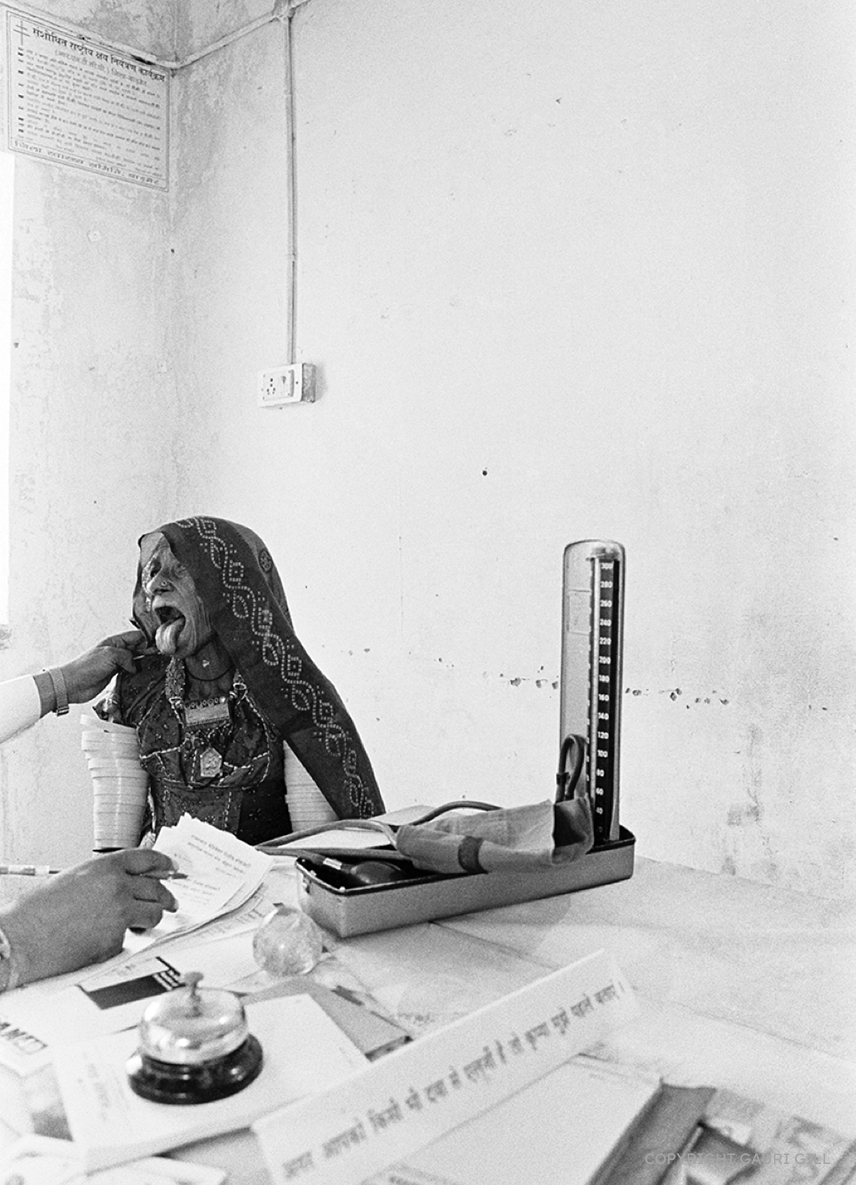
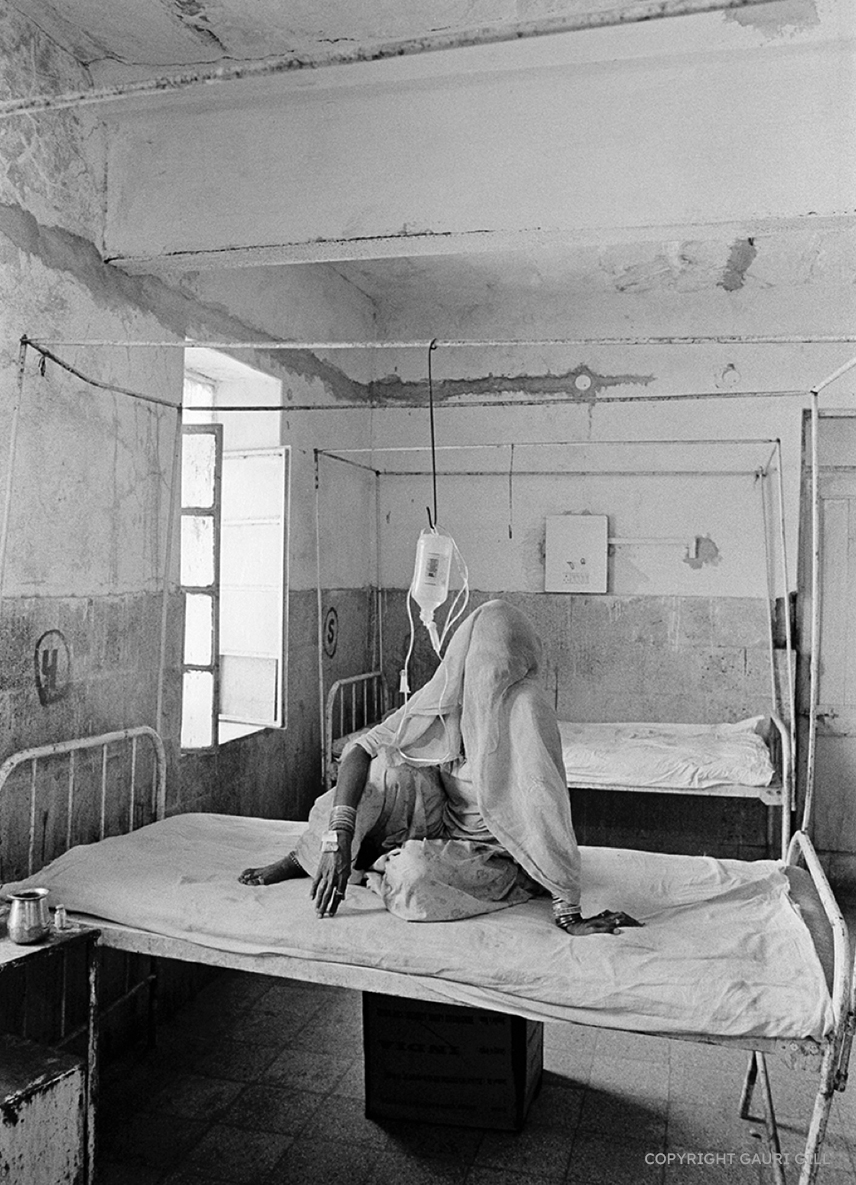
Notes from the Desert (1999–ongoing):
Long-term engagement with Rajasthani communities, precarity, survival. Link
Long-term engagement with Rajasthani communities, precarity, survival. Link
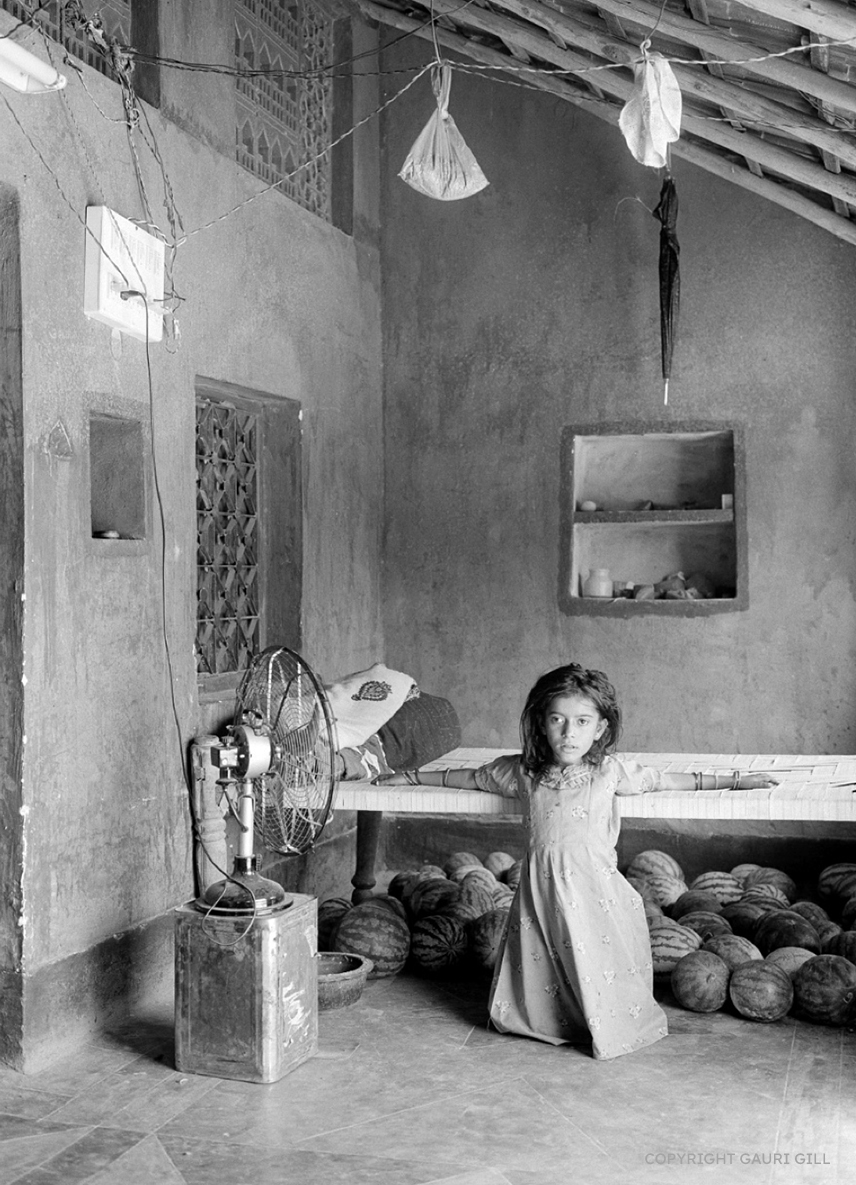
Balika Mela (2003–2010):
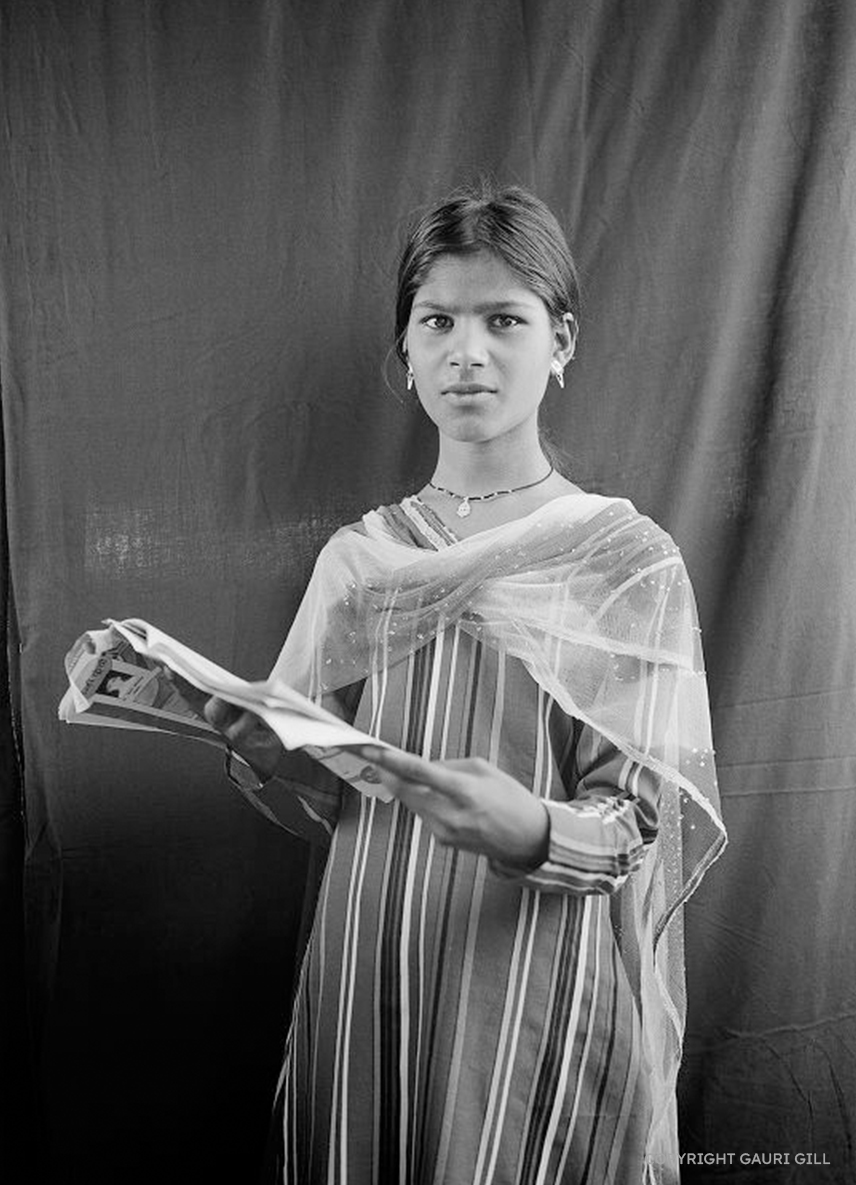
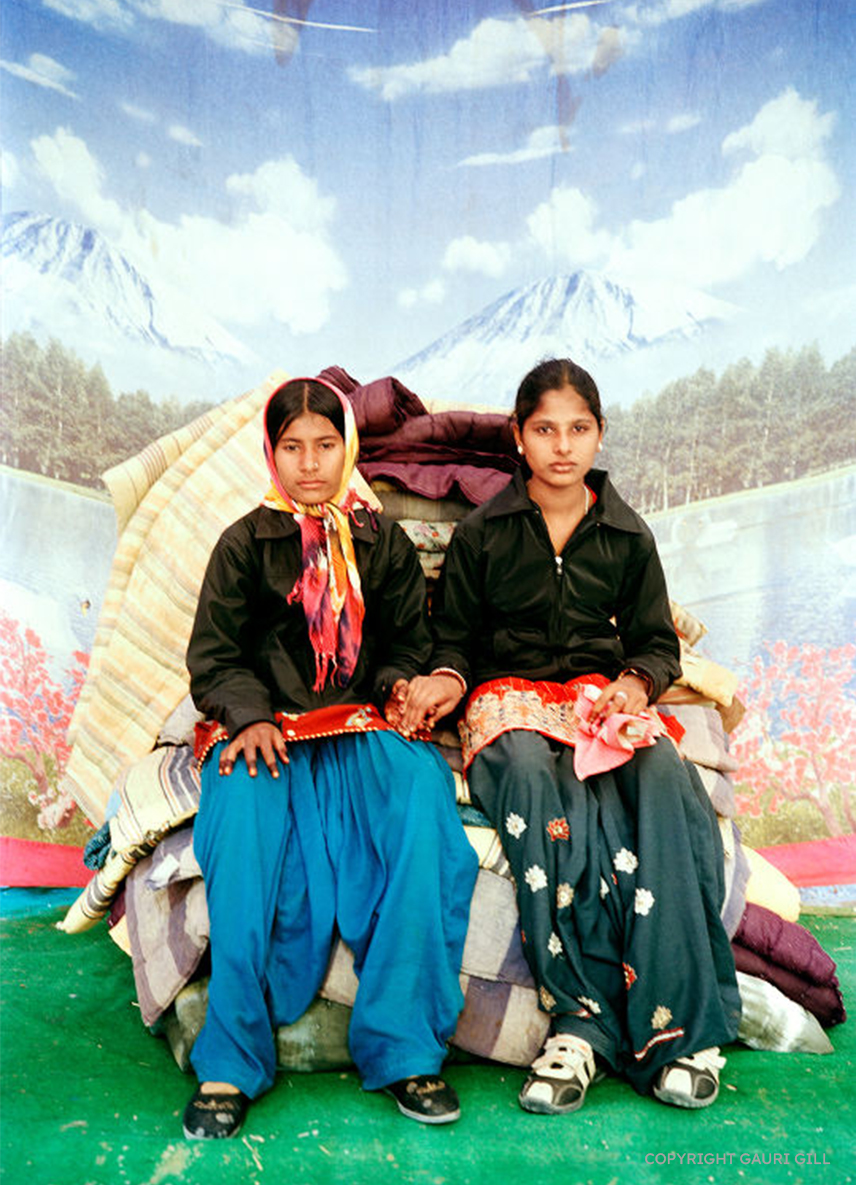
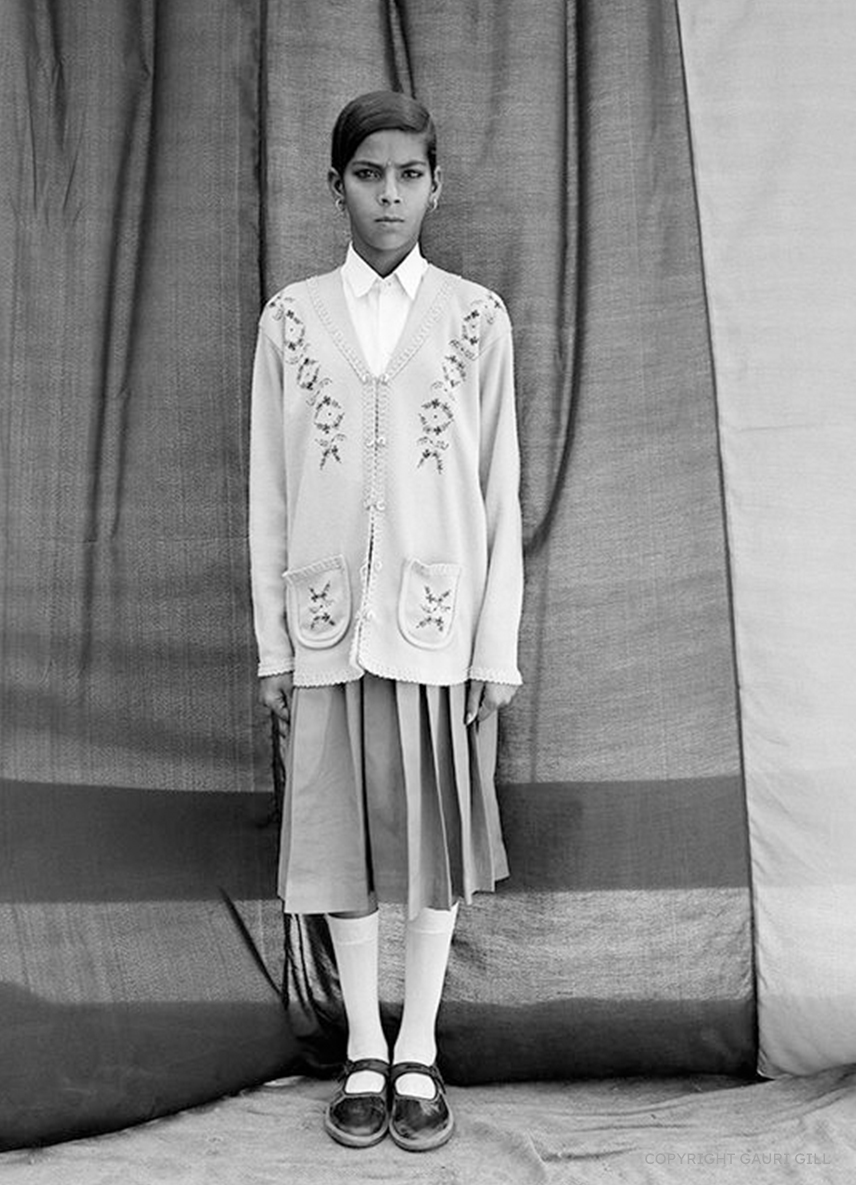
The book is a document of Gill’s photo studio set up to take portraits of the predominantly female children and adolescents that attended the fair in remote and rural western Rajasthan. Link
The book is a document of Gill’s photo studio set up to take portraits of the predominantly female children and adolescents that attended the fair in remote and rural western Rajasthan. Link
Fields of Sight (2013–ongoing):
Exploring intersection of land, labor, ecology. A conjoining of photography and Warli painting. Link
Exploring intersection of land, labor, ecology. A conjoining of photography and Warli painting. Link
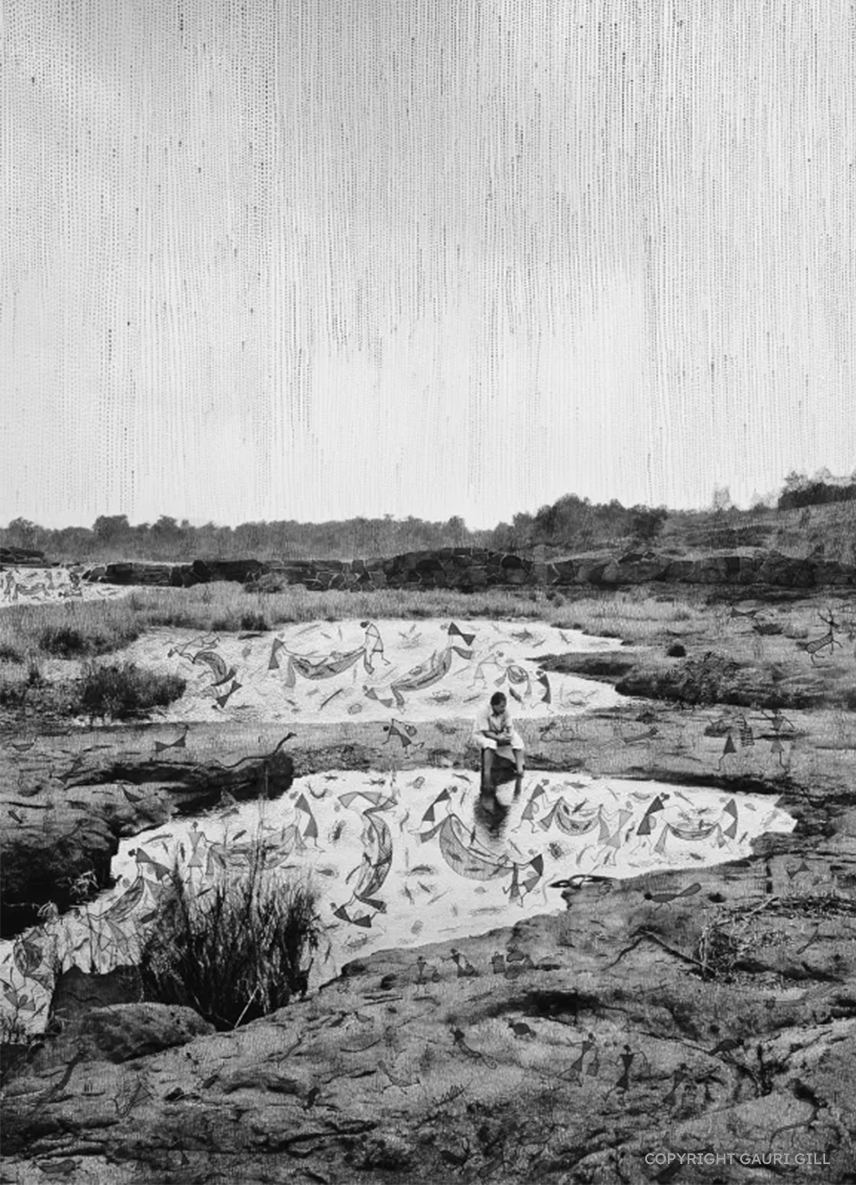
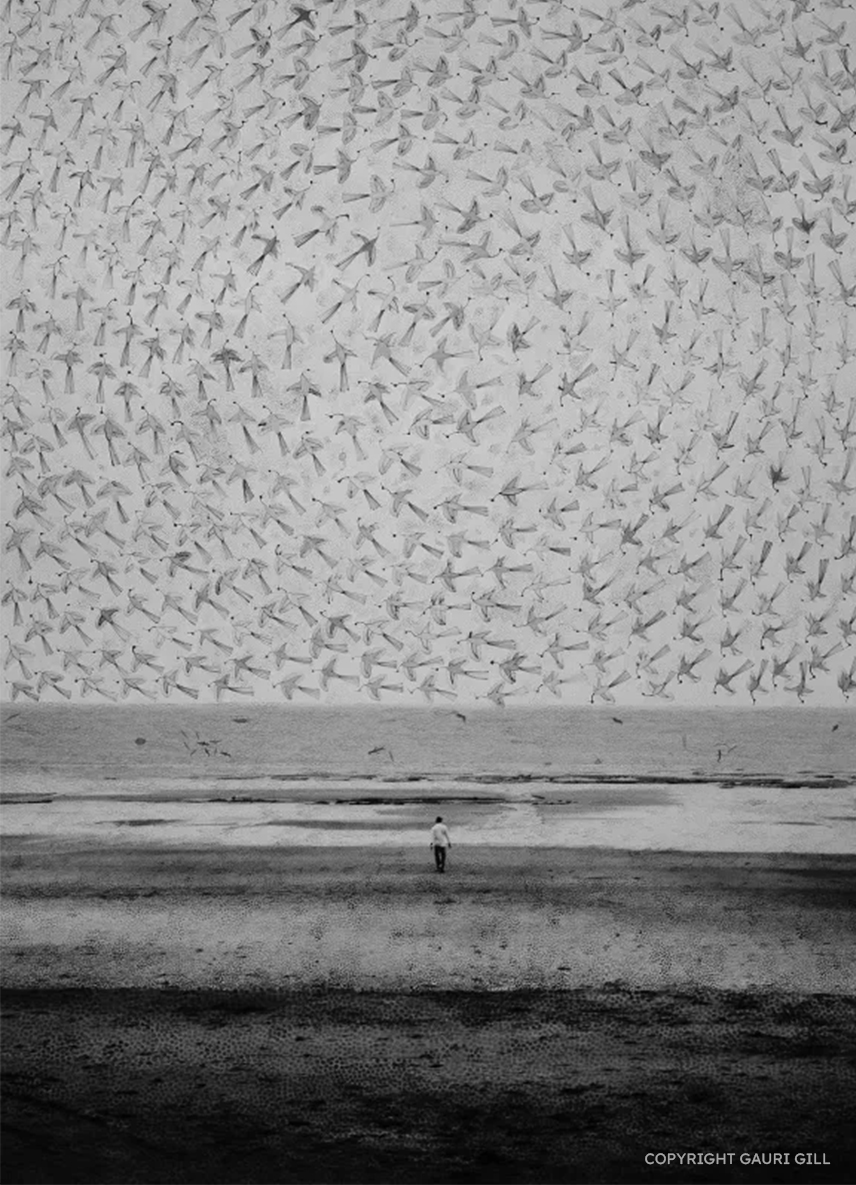
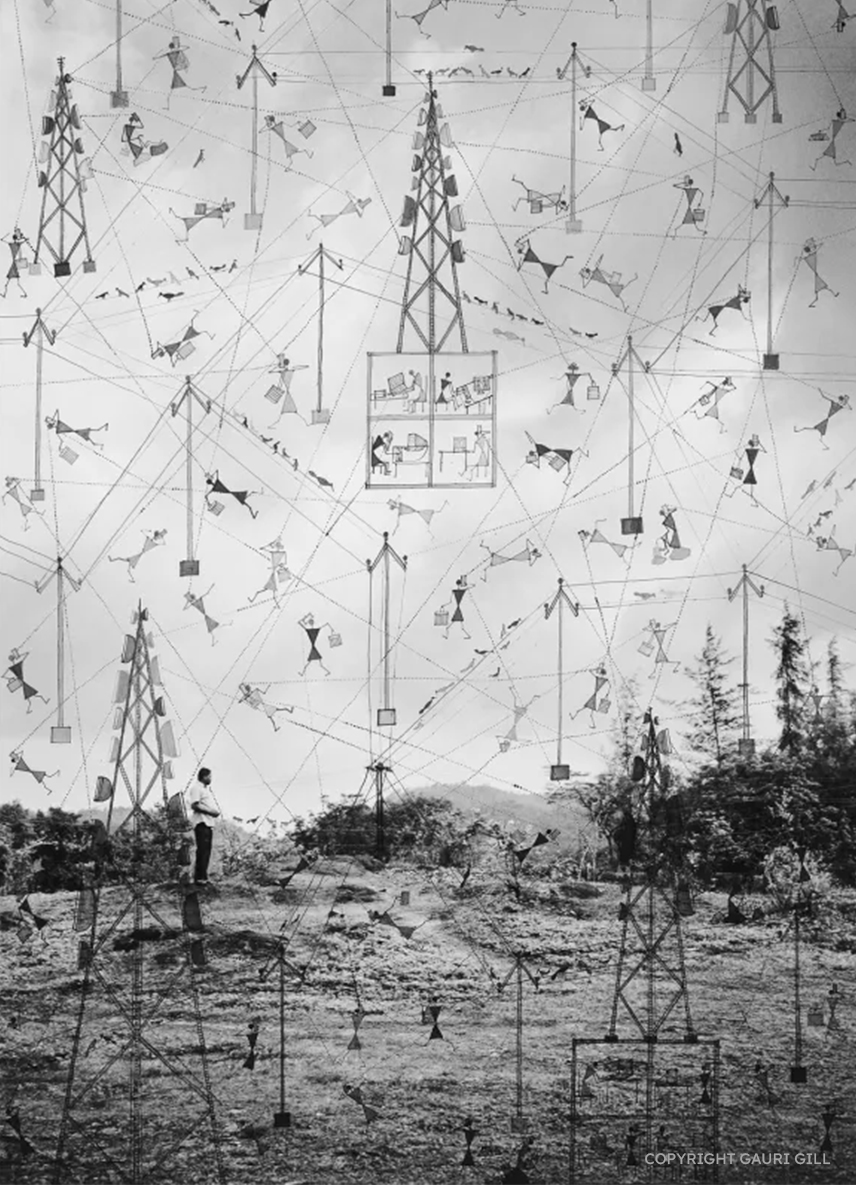
Gill's artistic statement
"I'm most interested in the human strategies through which people survive the precariousness of their difficult circumstances. The ingenuous ways people find to swim or to stay afloat despite injustice."
Sources & Credits (Verified):
- Gauri Gill official website
- Vadehra Art Gallery curatorial materials
- MoMA PS1 exhibition documentation (2018)
- 58th Venice Biennale official archive (2019)
- Louisiana Museum exhibition catalog and artist talks (2023)
- Prix Pictet award documentation (2023)
- Kadist digital archive: kadist.org/work/acts-of-appearance/
- Artist interviews and public talks (Jaipur Literature Festival, MoMA conversations)
- Sherman Contemporary Art Foundation publications
All photographs © Gauri Gill and respective institutions. Rights reserved.